Shakespeare’s Sonnets are some of the most fascinating and influential poems written in English. First published in 1609, […]
sonnets-021-040
21 articoli



«How can my Muse want subject to invent, While thou dost breathe, that pour’st into my verse». Like […]

«As a decrepit father takes delight To see his active child do deeds of youth». Sonnet 37, which […]

«Let me confess that we two must be twain, Although our undivided loves are one». Obstacles to the […]

«No more be grieved at that which thou hast done: Roses have thorns, and silver fountains mud». Whereas […]

«Why didst thou promise such a beauteous day, And make me travel forth without my cloak». The poet […]

«Full many a glorious morning have I seen Flatter the mountain-tops with sovereign eye». Sonnet 33 begins a […]

«If thou survive my well-contented day, When that churl Death my bones with dust shall cover». Sonnet 32 […]

«Thy bosom is endeared with all hearts, Which I by lacking have supposed dead». Sonnet 31 expands upon […]

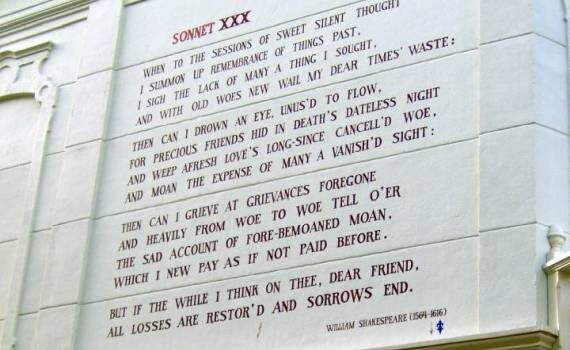
«When to the sessions of sweet silent thought I summon up remembrance of things past». The poet repeats […]

«When, in disgrace with fortune and men’s eyes, I all alone beweep my outcast state». Resenting his bad […]

«How can I then return in happy plight, That am debarr’d the benefit of rest?». Images of absence, […]


«Lord of my love, to whom in vassalage Thy merit hath my duty strongly knit». Sonnet 26 prepares […]

«Let those who are in favour with their stars Of public honour and proud titles boast». In Sonnet […]

«Mine eye hath play’d the painter and hath stell’d Thy beauty’s form in table of my heart». When […]